intent.md
What is wanted, in one sentence — and what is explicitly not part of it.
HandoverThe next person reads why this project exists before touching a line of it.
We build two things: software the next person can still understand, and data systems that pull the few pieces of information you must act on out of far too many.
The handoff chain
intent.md
What is wanted, in one sentence — and what is explicitly not part of it.
HandoverThe next person reads why this project exists before touching a line of it.
spec.md
The behaviour, written so it can be checked. Not an intention that is only complete in the author's head.
HandoverWhat the system should do is on the page. Nobody has to be asked.
plan.md · diff + tests
The cut, the change and the tests that hold it — together, not one after the other.
HandoverEvery change carries the reasoning it came from.
evals/
The acceptance tests. Frozen before the build, so the result cannot set its own bar.
Handover“Does it still work?” is a command, not an opinion.
PR + findings
What changed, and what turned up on the way. Including the part nobody wanted to hear.
HandoverWho approved it is recorded underneath — afterwards, not only before.
incident record
What happened, what caused it, and which rule exists because of it now.
HandoverOperations writes back into the specification instead of running beside it.
Six stages, six documents. Whoever takes over reads them in order — not the inside of a developer's head.
What we do
In both cases we replace a dependency on a few expensive specialists with a system somebody else can take over. What is produced belongs to the client and can be read back.
Instead of hiring a developer
Greenfield and legacy. What is produced is specified, tested and handover-ready — not a prototype that falls apart at the first change, and not code that only one person in the building understands.
Instead of looking for analysts
Data acquired, consolidated, assessed. Out of scattered sources a dependable model — and from it the few cases somebody actually has to act on.
Once both stand, we automate the processes in between. That is the third step — not the first.
Reference
An Austrian property investor. Several platforms are watched continuously; whatever matches his criteria reaches him — the rest he never sees.
The client is not named, not even on request. Why that is.

Several platforms, observed continuously.
The same asset, listed repeatedly — carried once.
language model
Extracts the attributes from the listing text. Input, not verdict.
deterministic
Computed, not estimated: assessed against the investment criteria, traceable to the source.
human
Only then does a message leave the system. No path bypasses it.
Products
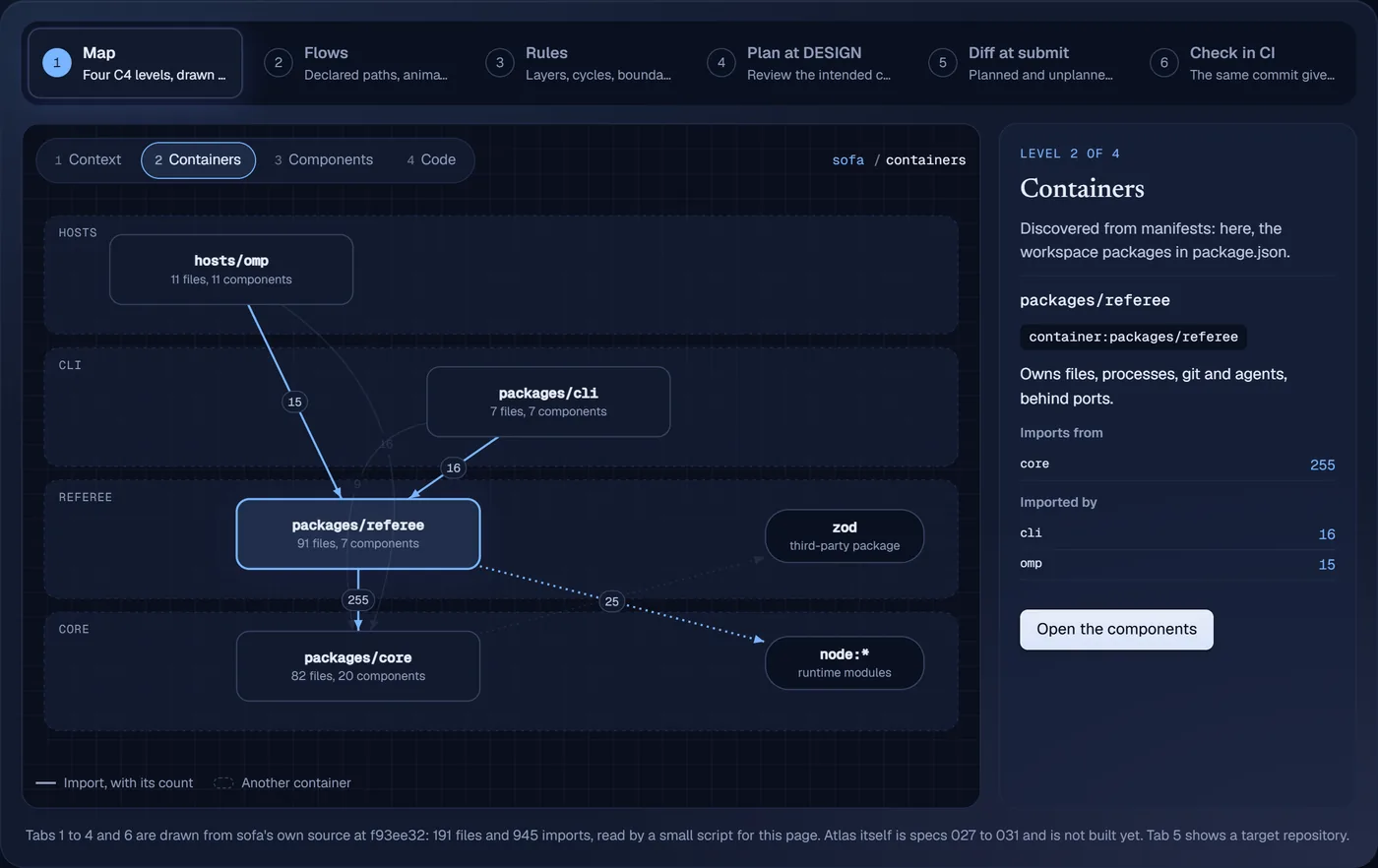
Agents write the code. Code decides every gate. You approve. BENCH brings that order into your existing setup; SOFA carries the whole way from ticket to merged commit.
The precursor
Blueprint Engine for Normalized Context & Handoffs. BENCH writes down what an agent must know before it starts — and hands it over in a form that can be checked.
The software factory
From ticket to merged commit. Agents draft, research and write; the code keeps the ledger and refuses any step the recorded facts do not support.
Capabilities
Four capabilities, always in the same order: acquire, consolidate, assess, act. The result is decision-making capability in complex information spaces.
Not maximally automated. Correctly automated. We decide together how far the machine goes alone — the final approval stays with you.

Websites, marketplaces, APIs, registers, documents, internal systems — where the information arises.
Scattered raw data into one asset: normalised, de-duplicated, enriched.
Assessment against your criteria: computed deterministically, not guessed by a model.
Into the CRM, the database, over an API — and action at the agreed degree of autonomy.
The method
Every system is a one-off. The method is not.
We observe markets, structure information, and build systems that turn it into decisions and actions.
SCHEMATIC — your criteria determine the yield
Schematic view of the selected stage.
Resources
Three reference works we built for our own work. They show how we think better than any reference could.
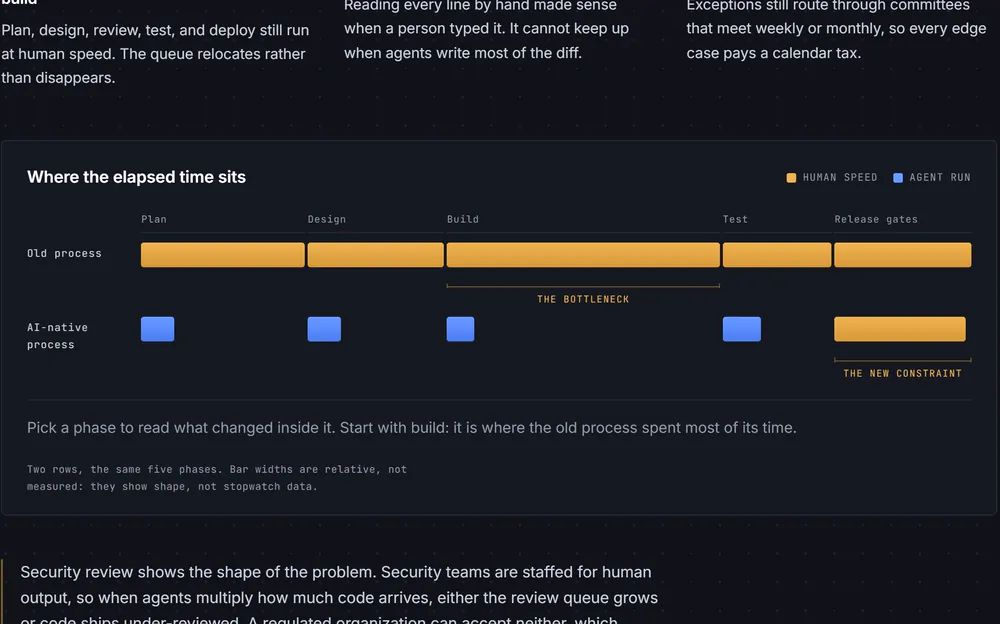
How the six stages of software development change once agents write the code. Artefacts, control points and measures — independent of any tool.
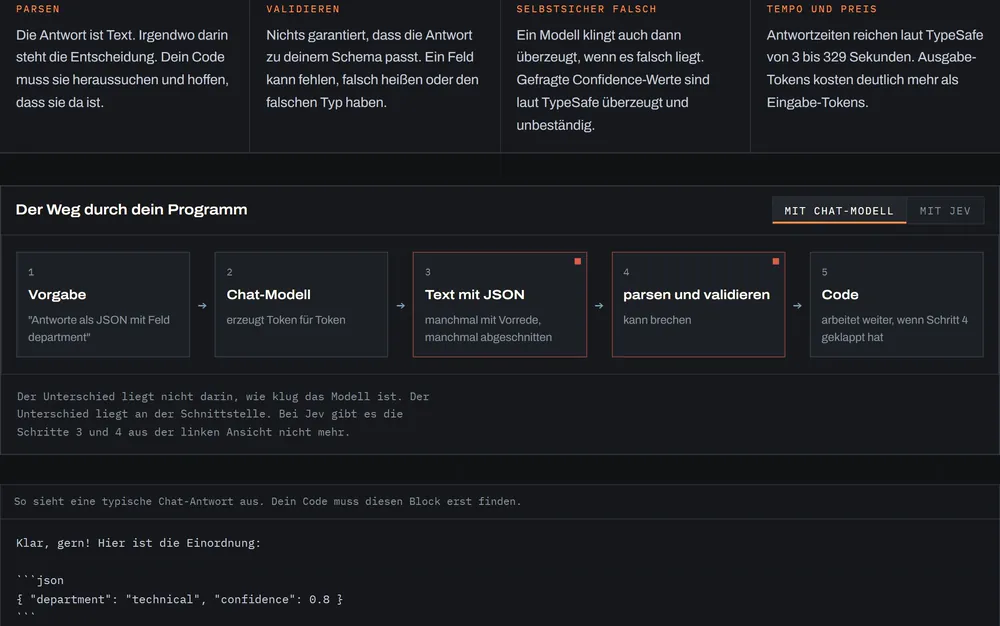
A model that writes no text but decides: typed answers with probabilities. Not our product — a component we build on.
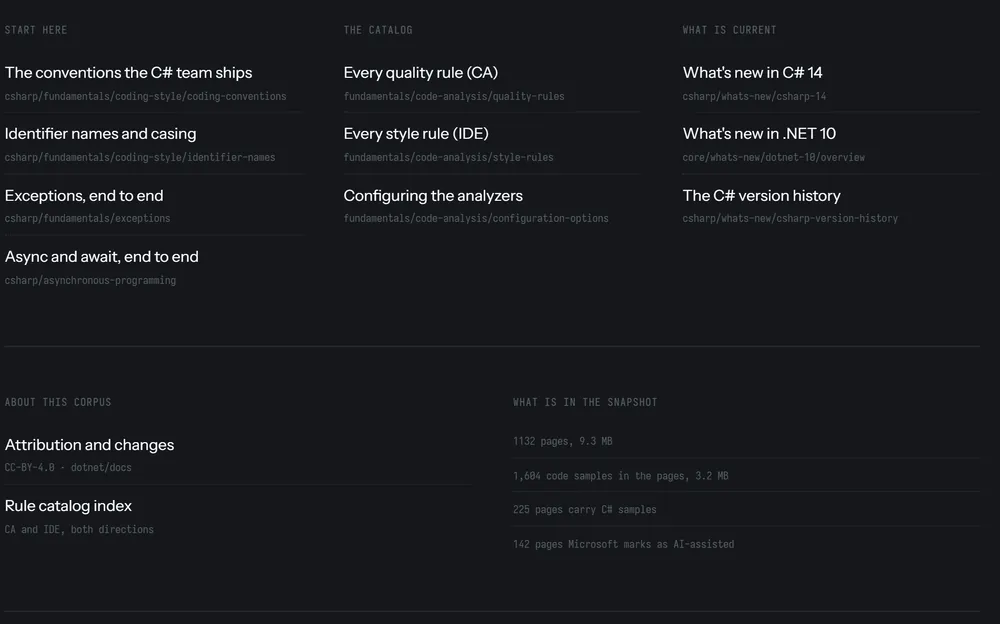
Microsoft’s C# documentation as one readable work: the language, the base class library, async, LINQ and the complete analyser catalogue. 1,132 pages, linked back to Microsoft Learn.
Confidentiality
Whoever engages us shows us criteria, thresholds, market — that is the strategy.


Contact
In discovery we establish whether it can become a system that holds. If it cannot, we say so.
Paid analysis phase: objective, information gaps, sources assessed technically and legally. The output is a defensible estimate — or the advice not to build it.
We build the system and integrate it into your infrastructure. Fixed price based on the Discovery.
Sources and criteria change. A monthly operations agreement keeps the machine running.
Enquiry